

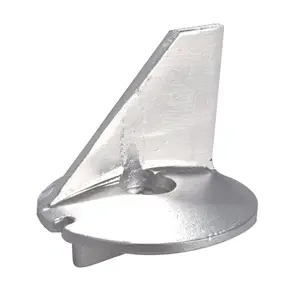
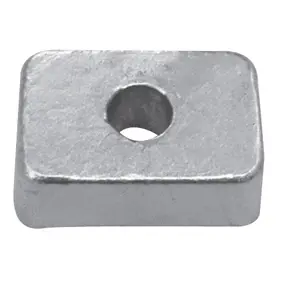
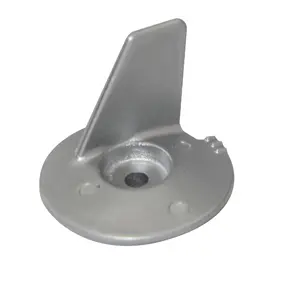
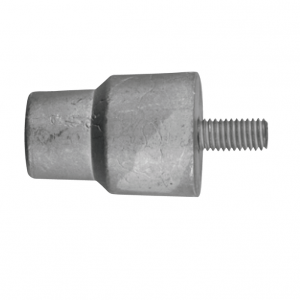
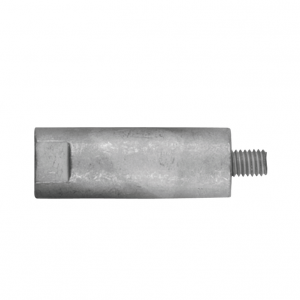
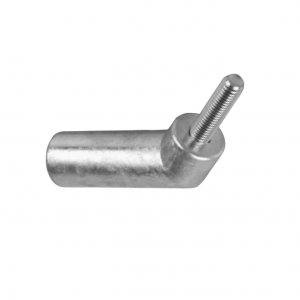
PROTECT AGAINST CORROSION WITH THE FINEST RANGE OF ANODES
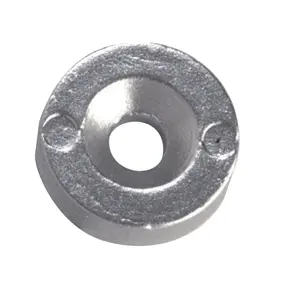
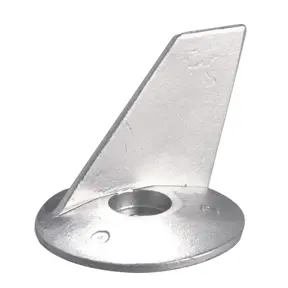
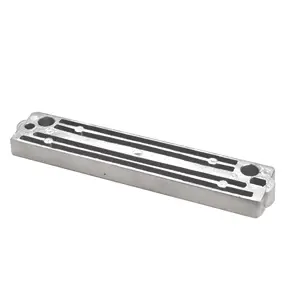
We can supply a full range of anodes from the following manufacturers.
Zinc for Sea Water, Aluminium for Brackish Water, Magnesium for Fresh Water.
All prices are +VAT.
Galvanic corrosion is a phenomenon that affects the majority of boats. If you have two dissimilar metals, such as stainless steel and bronze, the water will act as an electrolyte and the less noble of the two metals, the bronze, becomes an anode and will begin to corrode.
If this is a seacock, it could sink your boat. Electrically connect a less noble metal like zinc, and this becomes the anode, protecting the other metals from corrosion. In brackish water, the Baltic for example, you will need a more reactive metal, such as magnesium, to provide proper protection.
Bonding
Anodes only offer protection to metal they are electrically connected to. This means either in direct physical contact, or connected by a wire inside the boat. Use a multimeter in continuity mode to check bonded objects, such as the gearbox, have a proper electrical connection to the hull anode studs.
There is mixed opinion as to whether every through-hull fitting needs bonding; the bonded object needs to be fairly close to the protecting anode, and there is a risk it could introduce corrosion from stray current where there was little risk before. The decision is one of personal preference.
Your bonding system, if your through hulls are bonded, will also be connected to your negative battery bus bar. This gives a quick and easy route to ground for any stray current, rather than posing a danger to any humans on board who might touch those through hulls. There is also an increasing move towards high-strength plastic through hulls, which obviously negate the need for any type of bonding at all.
Fitting anodes
When you take your boat out of the water, you are looking for good amounts of corrosion on the anode, which means it is working. No corrosion means you have a problem with bonding. If it has corroded more the 50%, however, the anode isn’t big enough and you’ll need to replace it with a larger one.
To take off the anode, remove the 15mm nuts and slide the anode off the studs. When you put the new anode on, replace the spring washers as these lock the anode on, and use a drop of Locktite to keep the nuts in place.
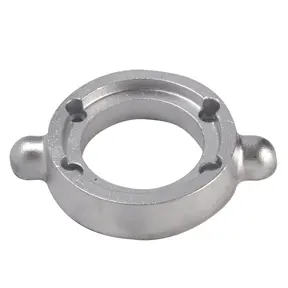
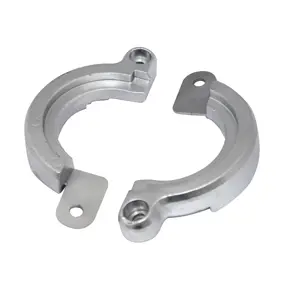
Don’t forget to put the supplied sponge mat between the boat and the flat surface of the anode as this protects the hull when the anode corrodes. There will also be an anode on the prop shaft or on the sail drive. Again, these need to be large enough that they don’t corrode over 50% in the time the boat will be afloat. Make sure the two halves of the shaft anodes are snugged up to a clean shaft, and the screws secured with Locktite.
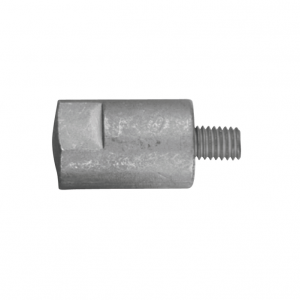
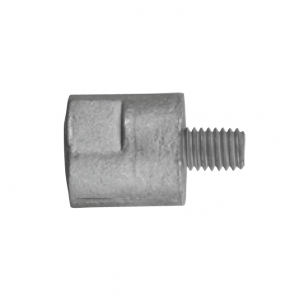
Don’t forget other metal underwater fittings, such as rudder skeg shoes or refrigerator plates, which often have their own anodes, and some engines also include anodes inside the raw-water cooling system that will need changing.